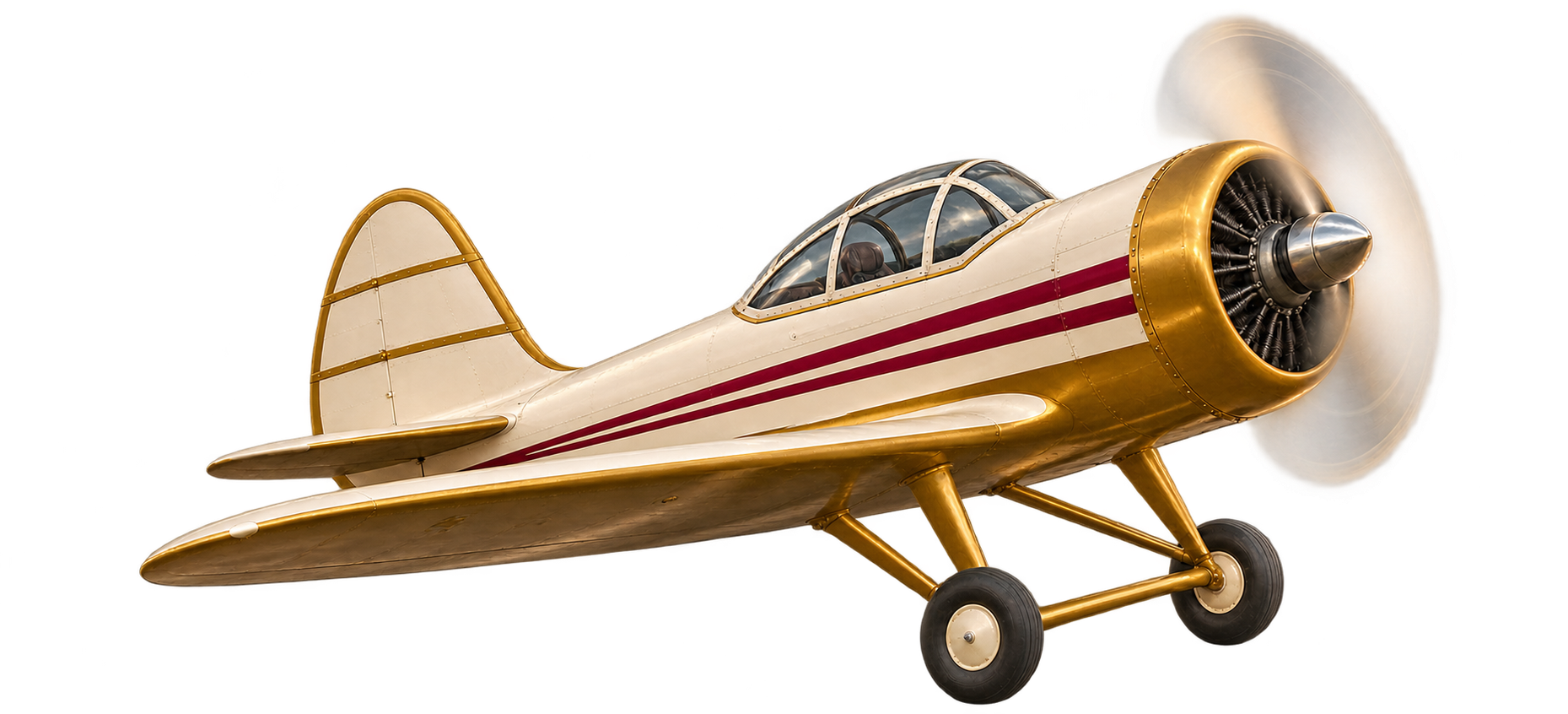
High Flyer is a real-time multiplayer crash game from Pragmatic Play, released on 19 September 2024. A small aircraft climbs as a multiplier rises from 1.00x. The round ends at a randomly predetermined crash point; any bet still active at that moment loses. Cashing out before the crash settles the bet at the multiplier processed by the game server.

High Flyer is a real-time multiplayer crash game from Pragmatic Play, released on 19 September 2024. A small aircraft climbs as a multiplier rises from 1.00x. The round ends at a randomly predetermined crash point; any bet still active at that moment loses. Cashing out before the crash settles the bet at the multiplier processed by the game server.
The game combines two independent bet spots, manual cash out, auto cashout, optional autoplay, a live leaderboard and statistics covering 500 previous rounds. Its published optimal theoretical return to player (RTP) is 97.00%. The advertised multiplier can reach 1,000,000x, but the official rules impose an automatic payout limit of €250,000 or its currency equivalent. Those two numbers describe different limits and should never be treated as an unrestricted million-fold cash prize.
High Flyer at a glance
| Game | High Flyer |
|---|---|
| Developer | Pragmatic Play |
| Release date | 19 September 2024 |
| Game category | Multiplayer crash game |
| Published optimal theoretical RTP | 97.00% |
| Theoretical house edge | 3.00%, calculated from the published RTP |
| Maximum crash multiplier | 1,000,000x |
| Automatic payout ceiling | €250,000 or currency equivalent, subject to game rules |
| Bet spots | Up to two per round |
| Auto cashout setting | 1.01x - 100x |
| Round history | Multiplier distribution across the previous 500 results |
| Social features | Leaderboard and optional multiplayer chat |
| NZD bet limits | Operator-specific; read the limits displayed inside the game |
What kind of game is High Flyer?
High Flyer belongs to the crash games category, not the conventional online slots category. There are no spinning reels, paylines, Wild symbols, Scatter symbols, free spins or bonus-buy rounds. The aeroplane and moving multiplier are the central elements. A successful cashout, rather than a symbol combination, determines the payout.
The game has an aviation theme with a prominent multiplier display and an aircraft that leaves the screen when the round crashes. Operators can customise elements such as the plane, background and status messages, so the appearance may differ slightly between casino versions. Pragmatic Play lists High Flyer alongside its other crash titles, Spaceman and Big Bass Crash.
The distinction from slots matters for readers comparing features. A High Flyer bet is not resolved by matching symbols. The risk comes from the unknown point at which the flight ends and the choice of whether to settle a live bet before then. The crash point is already determined randomly; a player's reaction cannot change it.
How a High Flyer round works
- Betting window: select a stake in one or both panels and confirm it before the BETS CLOSED message appears. The NEXT GAME IN countdown shows when a new round is approaching.
- Take-off: the multiplier starts at 1.00x and increases while the aircraft remains in flight. Stakes cannot be added to that round after betting closes.
- Cashout decision: a confirmed cashout settles at the multiplier accepted by the server. An enabled auto cashout uses the previously selected target instead of waiting for a manual request.
- Crash: when the aircraft flies away, all outstanding bets lose. A crash at exactly 1.00x results in losses for all stakes in that round.
- Next flight: the outcome is recorded in the game history, and the next betting window opens. Pragmatic Play described a five-second interval between flights at launch; that is not a guaranteed five-second duration for the flight itself.
A cashout payout includes the original stake. With a NZ$5 bet, settlement at 2.00x returns NZ$10, comprising the NZ$5 stake and NZ$5 profit. Settlement at 3.00x returns NZ$15. If the round crashes before the bet is cashed out, the NZ$5 is lost. These figures illustrate the payout calculation rather than the odds of reaching either multiplier.
RTP, house edge and the 1,000,000x ceiling
What a 97% RTP actually describes
Pragmatic Play's published game help specifies an optimal theoretical RTP of 97.00%. Expressed in the usual way, that corresponds to a theoretical house edge of 3%. It is a long-run mathematical property, not a promise that NZ$97 will be returned after every NZ$100 wagered, nor a forecast for a short session.
The actual result for a player depends on the crash outcomes, the bet sizes and the cashout targets used. A low target increases the frequency with which a successful cashout can occur, but each successful payout is smaller. A high target offers a larger payout when reached, at the cost of more bets ending before that target. Neither changes the randomly predetermined crash point. The RTP displayed in the active game's help panel is the relevant figure for the version being offered.
Maximum multiplier versus maximum payout
The official maximum crash multiplier is 1,000,000x. A separate rule states that a bet is cashed out automatically when it reaches that multiplier or when its potential payout reaches €250,000 or the equivalent in the game's currency. The payout limit may therefore be reached long before the theoretical multiplier ceiling.
For a New Zealand player, there is no reliable fixed NZ-dollar figure to quote without the relevant game's currency conversion and operator configuration. A listing that presents 1,000,000x as the unrestricted cash maximum is misleading; a listing that calls 10,000x the official maximum crash multiplier conflicts with Pragmatic Play's published rules. The game also does not feature a progressive jackpot that bypasses the cap.
Volatility and odds
Crash games can produce many small outcomes and occasional much larger multipliers. Waiting for a large multiplier exposes a bet to more ways of losing before settlement. A 500-round chart can describe what has already happened, but it does not establish when another high multiplier is due. Consecutive low crashes do not create a debt that the next round must repay.
Two bets: separate cashouts, shared exposure
High Flyer supports up to two bets in a single round. Each panel can have its own stake and cashout arrangement. One panel might have an automatic target of 1.50x while the other remains open for a manual cashout. Both positions face the same crash event; they are not two independent random flights.
Splitting a stake changes the pattern of potential payouts, not the game's house edge. It also does not automatically create a hedge. Consider two NZ$2 bets: the first settles at 1.50x and returns NZ$3, while the second crashes without cashing out. NZ$4 was staked and NZ$3 returned, leaving a net loss of NZ$1 despite one successful cashout.
The game shows the total amount committed across both panels. Comparing that figure with a planned spend limit is more meaningful than viewing either cashout as an isolated win.
Manual cash out, auto cashout and autoplay
Manual cash out
A manual CASHOUT request is processed by the server, not settled at the precise instant a finger touches the screen. The game rules describe typical connection-related delays of roughly 100 - 200 milliseconds. If the crash occurs before the request is processed, the cashout can fail. Confirmed winnings are rounded down to two decimal places.
Auto cashout
Auto cashout lets a player select a multiplier during the betting window. The official setting range is 1.01x to 100x. If the crash multiplier reaches or exceeds the selected threshold, the auto cashout settles at that target under the published rules. A target cannot be changed once the round has started, although a manual cashout at a lower multiplier remains available while the bet is active.
The 100x limit applies to the auto cashout setting, not to the maximum crash multiplier. Treating those limits as interchangeable creates a false description of the game.
Autoplay
Autoplay repeats a selected bet across multiple rounds using configured cashout settings. The game help describes counters for remaining rounds and stopping conditions involving an insufficient balance or selected win/loss triggers. Available controls can differ across jurisdictions and operator versions. An autoplay function should not be assumed to be enabled on every New Zealand-facing platform.
Automation prevents a forgotten button press; it does not forecast crash results or eliminate losses. Repeated rounds can also increase the amount wagered over a short period, particularly because the game has brief gaps between flights.
Leaderboard, 500-round statistics and game history
High Flyer includes a multiplayer information panel organised around Bets, History, Top and Stats. The live Bets view shows leading stakes, cashout multipliers and winnings. The previous-round view records participants and their decisions; personal History records the player's own settled and lost bets. The Top tab highlights notable wins and multipliers.
The Stats area includes recent crash results and a distribution chart for the last 500 rounds. A bar showing how many past rounds finished between specified multiplier bands is a historical frequency, not an estimate tailored to the next flight. The leaderboard can be useful for understanding what other participants have done, but another person's bet size or successful exit is not evidence of a reliable strategy.
An optional chat window adds a social element, and some operators may display customised messages or branding. The Game ID attached to each round is more practically important: it identifies a specific event if a settlement, balance change or connection problem needs to be examined.
Desktop, mobile and demo play
High Flyer is designed for browser-based play and is listed as an HTML5 game in major game catalogues. Its controls and multiplier display are available on desktop and mobile layouts, while statistics and other secondary panels may move into menus on a smaller screen. The publisher's game page provides a way to view the title, and third-party catalogues also list demo versions.
Demo mode uses practice credits rather than withdrawable money. It can clarify the two-panel interface, confirm-bet timing, the meaning of total return versus net profit and the difference between manual and automatic settlement. It cannot prove a winning system: observing a run of multipliers does not alter the distribution of the next randomly determined crash point.
Language, currency, bet limits, demo access and some automated features are controlled by the operator. A game running in English does not establish that an NZD wallet is supported. Likewise, finding High Flyer in an international casino catalogue does not establish that the same casino currently serves New Zealand customers.
What if cashout fails or the connection drops?
The official help distinguishes a failed cashout request from a general disconnection. A server-rejected cashout can produce the message CASHOUT FAILED. In the event of a technical malfunction, the documented general rule is that the game is cancelled and its bets refunded.
The disconnection policy has more specific branches:
- Disconnecting before BETS CLOSED discards the bet.
- A disconnect after betting closes but before take-off, or while the displayed multiplier is 1.00x, is generally refunded unless 1.00x is the crash result; that case is a loss.
- When the live multiplier is at least 1.01x and no crash has occurred, the game help provides for a forced cashout at disconnection.
- The published disconnection policy explicitly states that it does not apply when auto cashout is enabled.
Once a connection is restored, the bet outcome can be checked in History. The round's Game ID, stake, displayed outcome and recorded settlement are the useful details for an operator's support team. Connection speed still matters during manual play because a cashout must reach the server before the crash.
High Flyer in New Zealand: access & regulation
For New Zealand readers, the main practical question is not whether an international game directory lists High Flyer. It is whether the particular online casino is permitted to serve NZ customers, what protections apply, and what rules are displayed in the actual game. Neither Pragmatic Play's release announcement nor a catalogue listing establishes an individual casino's regulatory status.
New Zealand's Online Casino Gambling Act 2026 came into force on 1 May 2026. According to the Department of Internal Affairs (DIA), operators that served customers before that date may continue during the initial transition until 1 December 2026, subject to the applicable conditions. From 1 December 2026, only operators that succeed in the licensing process and receive the relevant exemption can continue offering online casino gambling while their applications are assessed. The DIA expects licences to begin being issued in early 2027.
Advertising restrictions remain in force during this transition. Game availability, the legal position of an operator and the rules for automated features must be checked independently. This regulatory information reflects the DIA guidance available on 5 November 2026; operator eligibility and the licensing register are time-sensitive.
The currency shown on a New Zealand-facing site may be NZD or another permitted wallet currency. Minimum and maximum stakes are displayed alongside the game name and can vary by operator. The €250,000 payout limit is specified as a currency equivalent in the game help, so it should not be advertised as a fixed NZ$250,000 cap. Exchange rates, displayed stakes, payout limits and withdrawal conditions are separate issues.
How High Flyer compares with Pragmatic Play games
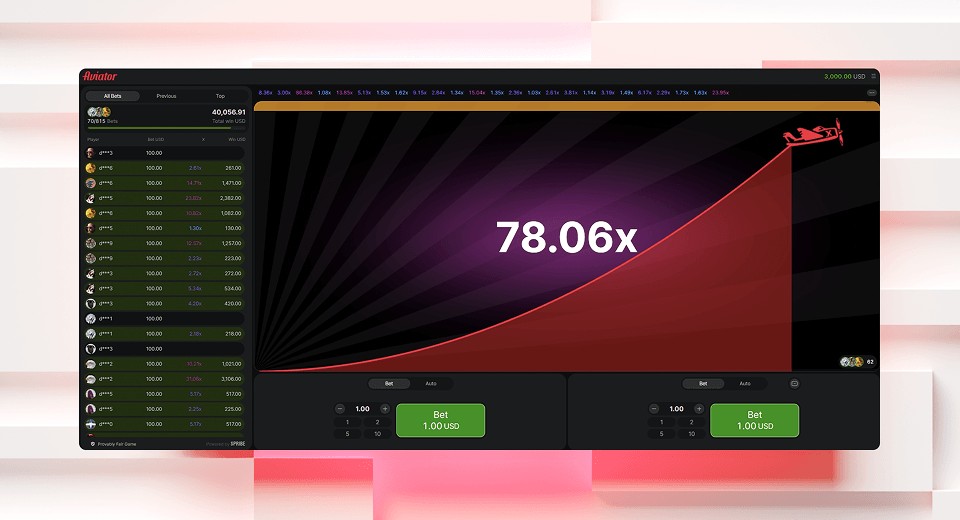
Pragmatic Play launched High Flyer as the third entry in its crash range, following Spaceman and Big Bass Crash. All three sit outside conventional reel-based slot play, but High Flyer's identity is especially clear: an aircraft, a rising multiplier, two available bet spots and a record of the last 500 outcomes. Comparisons with titles such as Aviator often centre on the timing of cashout and social features rather than free spins or paylines.
High Flyer's measurable differences are its published 1,000,000x multiplier ceiling, two simultaneous bet panels, configurable automatic cashout and extensive recent-round display. Those features improve the available controls and visibility; they do not remove the mathematical disadvantage associated with gambling.




Leave a Reply